This month, as we reflect on the power of generosity, we are reminded that true generosity is not just the act of giving. It is the courage to create, restore, and share resilience, even when the threads unravel.
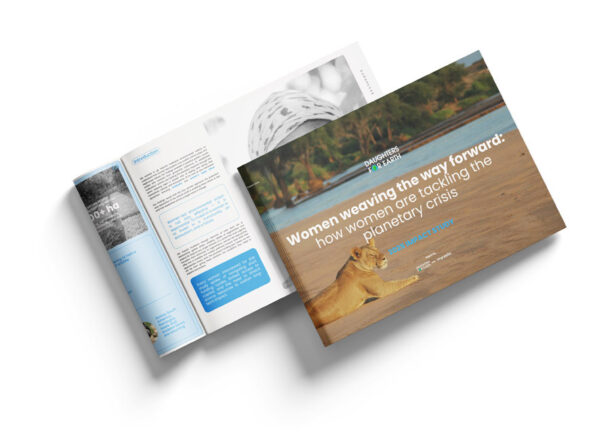
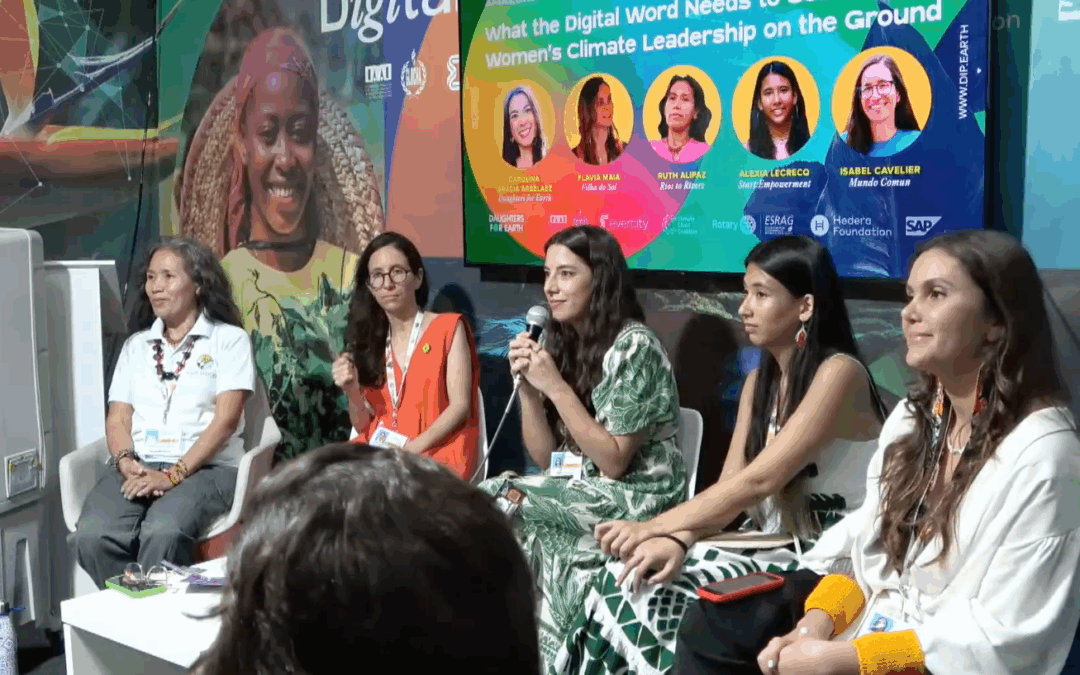
Daughters for Earth continues to tell this story around the world, especially as found in the just-released Impact Study 2025 – Women Weaving the Way Forward: How Women are Tackling the Planetary Crisis. Most recently, Daughters’ own Carolina García Arbeláez brought that story to life alongside at COP30, along with visionary leaders like Ruth Alipaz (Ríos to Rivers), Alexia Leclercq (Start:Empowerment), Isabel Cavelier (Mundo Común), Dr. Flávia Maia (Filha do Sol).

The panel – What the Digital Word Needs to See: Women’s Climate Leadership on the Ground — explored a range of topics on how women-led and Indigenous-led efforts are not only restoring ecosystems, but restoring communities and economies as well.
As Carolina shared, “When a woman restores a forest, she also restores community. She blends ancestral wisdom with new technology and opens the path for others to follow.”
One big takeaway from COP30’s digital pavilion is that it’s very clear that the planet is going through a digital transformation. But it’s not clear how we can use that power wisely, for good.
Flávia and Alexia, for example noted that AI datacenter were depriving communities near them of water … but for what reason?
They also discussed how this power could track certain metrics better than ever, such as how many acres of land has been replanted. But it was and would remain terrible at seeing the root of why that might have happened. A computer may see that seeds were planted, but couldn’t see the additional community members brought in, the care that they each had and grew, and the connections between them that were formed by this initiative.
Without a body, the AI will always miss the threads of connections that women are so often weaving together.
The panelist saw that climate tech must evolve to reflect what’s invisible but essential. Satellite monitoring and AI together can track reforestation and ecosystem change — but they miss the depth of human relationships, culture, spiritual resilience, and community healing that make these initiatives effective.
As a panelist noted, “The digital world can measure degradation and regrowth, but not the strength of a grandmother who teaches through weaving, or the courage of a young activist who refuses to accept that exploitation is the only opportunity.”
It was clear from this panel that emotional connection is as critical as digital connectivity, and as they said, that “climate action begins in the body — in the ability to feel cared for, not alone.”
As our impact work expands, so does the tapestry, woven from generosity, leadership, and shared purpose.