A Buffalo Dance often marks a time of rest, gratitude, and renewal in the Pueblo communities of what is now called New Mexico. As our calendars flip from 2025 to 2026, this seasonal wisdom feels especially relevant. While modern culture urges us to “start strong” in January—set goals, move faster, push harder—the Buffalo Dance reflects a different truth: restoration is not a pause from life, but a condition for life’s continuation. What if slowing down is not falling behind, but aligning with how renewal actually works? What if we rethought how we enter the new year?
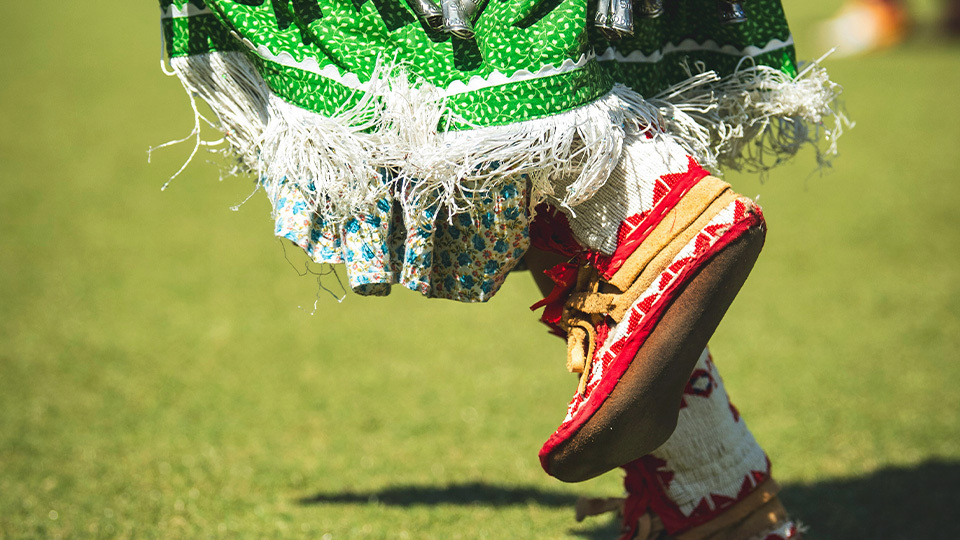
The Buffalo Dance (sometimes referred to as the Bison Dance) is a sacred ceremony observed among Pueblo peoples, including Hopi and others. While practices vary across communities, the dance honors the reciprocal relationship between people, animals, land, and season—recognizing the buffalo as a source of sustenance, continuity, and balance. Often associated with winter ceremonial cycles, it reflects gratitude for what has sustained the community and respect for the limits that ensure survival.
The ceremony commonly includes rhythmic drumming, singing, symbolic regalia, and coordinated movement that reflects reverence, responsibility, and continuity. Rather than emphasizing constant expansion or extraction, the Buffalo Dance embodies an understanding that life endures through balance: honoring sacrifice, conserving resources, and maintaining right relationship with the living world. Knowledge is passed between generations, reinforcing cultural continuity and a community responsibility to the land and to one another.
It’s an understanding that endurance comes from honoring limits, not pushing beyond them.
At its core, the Buffalo Dance reflects a worldview in which timing matters as much as action. Winter is not seen as a failure to advance, but as a period of alignment: when restraint, gratitude, and reflection ensure continuity. Rather than measuring progress by speed or output, this seasonal logic asks a different question: Are we moving in a way that can be sustained? In this view, slowing down is not falling behind. It is staying in relationship—with the land, with the community, and with the conditions that make renewal possible.
For many of us, January arrived loaded with expectation: clarity, momentum, reinvention, goals, action. Pueblo wisdom suggests another entry point—one that values attentiveness over urgency. Instead of rushing to define what comes next, winter invites observation: What endured from the year before? What resources need replenishing? What patterns deserve attention before they are accelerated? Entering a new year this way doesn’t delay change—it improves its direction.
This perspective can feel quietly radical. It offers permission to approach renewal not as self-improvement, but as stewardship—of energy, attention, and commitment. The lesson is not to abandon ambition, but to sequence it wisely. When rest leads, action becomes clearer. When gratitude precedes growth, decisions tend to last. In a world that rewards speed, choosing alignment may be one of the most practical resolutions we can make.
At Daughters for Earth, we see this same logic reflected again and again in women-led environmental work: when action is grounded in relationship and timing, it lasts. This is one of the patterns we continue to learn from — and support.
Click here to support women-led environmental restoration. >