In a world that often feels unmoored — personally, socially, globally — many of us are longing to find peace in our personal lives. But how can we find peace in these challenging times? And how might women’s leadership play a role?
Research shows that being in nature isn’t just restorative for our minds; it reshapes how we relate to stress, others, and ourselves.
Over the past two centuries, our relationship with the natural world has changed dramatically. Researchers at the University of Derby have documented what they call an “extinction of experience” — a long-term decline in everyday connection with nature, estimated at roughly 60% since the 1800s. As our lives have moved indoors and online, something essential has quietly faded: regular, meaningful contact with the living systems that support our bodies, emotions, and attention.
This loss isn’t abstract. It shows up in rising stress, mental fatigue, and a growing sense of disconnection, and this is associated with negative effects on our bodies and minds. But the same research offers hopeful news: rebuilding our relationship with nature can measurably improve wellbeing.
Studies from King’s College London, for example, found that even everyday encounters with birds — simply seeing or hearing them — were linked to lasting improvements in mental wellbeing, including among people experiencing depression. Other research has shown that natural sounds like birdsong can lift mood and reduce anxiety, while traffic noise has the opposite effect.
While it’s easy to think “I don’t live near a forest,” what matters most isn’t actually dramatic wilderness experiences. It’s small, meaningful moments of attention. The Derby research identified five “Pathways to Nature Connectedness” that help explain this: engaging the Senses, feeling Emotion, noticing Beauty, finding Meaning, and acting with Compassion toward the natural world. These are ways of relating, as we shift from consumption to connection and from distraction to presence.
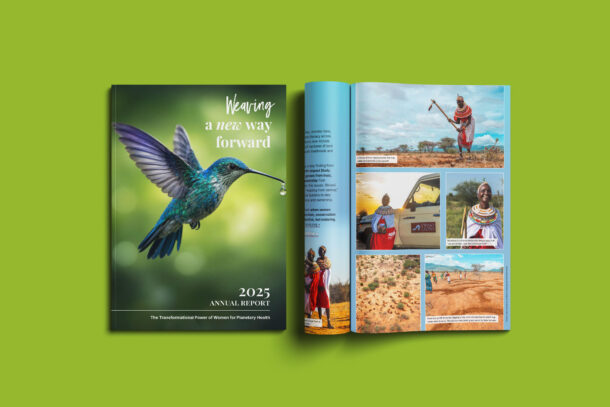
This is where women’s leadership offers an important model. Daughters for Earth’s groundbreaking 2025 Impact Study found that, across regions and ecosystems, women-led environmental initiatives consistently centered relationship with land, water, and the community wellbeing. Their work doesn’t treat nature as a backdrop to human life, but as a living system we are all connected with.
Women-led solutions are more likely to be designed not only to restore ecosystems, but to strengthen the social fabric around them — livelihoods, food security, knowledge-sharing, and intergenerational care. It’s a practical, common-sense approach that mirrors what science now tells us about personal wellbeing: lasting resilience grows out of connection, not control.
To say it another way, peace is not the absence of difficulty. It is the presence of connection.

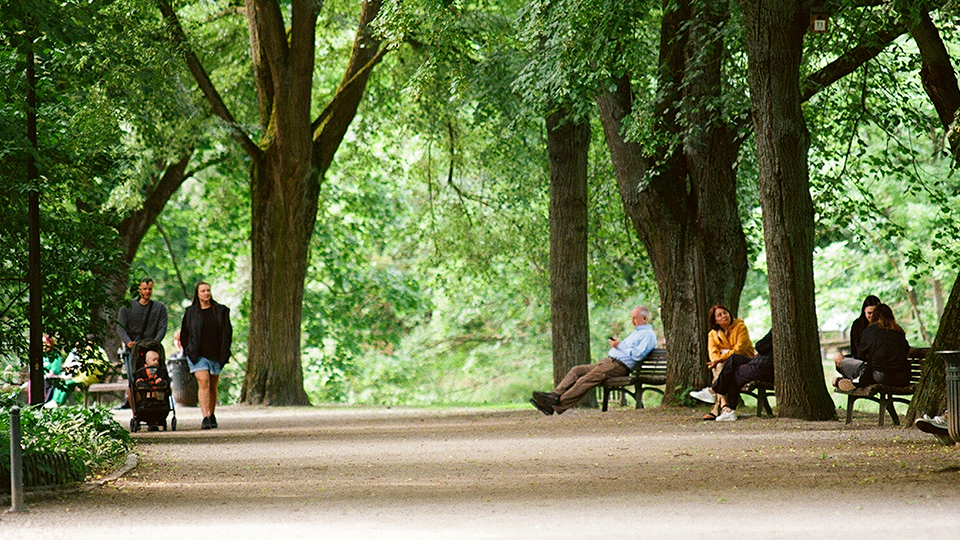
So, how do we find peace? Our invitation to you is simple and human. Step outside and notice what’s already there. Listen for birds. Feel the air. Watch how the light moves across a wall or a tree. Notice what you’re feeling. Find the beauty in your environment. And find some compassion for the natural world. If you’re able, invite someone to join you.
Spend time on your relationships with the land, the water, other living beings, and one another… even if just a few moments. It matters.
These moments may seem small, but they recalibrate our nervous systems and expand our capacity to respond thoughtfully rather than reactively. From that steadier place, we make better decisions for ourselves, for our communities, and for the planet.
We’d love to hear how you are finding moments of grounded peace. Share a photo, a sound, or a simple practice that’s helping you reconnect with nature and tag us on social media so we can learn from one another.